

Small State, Steep Terrain, Big Material-Handling Needs — Conveyors That Actually Fit
Mizoram is not a state of giant plants and multi-kilometre conveyor galleries. It is a state of small and mid-size units scattered across hill towns and valleys: bamboo processing yards, ginger and turmeric drying sheds, chilli and pineapple processing lines, rice mills, brick kilns, stone crushers, sawmills and border-trade godowns around Zokhawthar. These units do not need a 3-kilometre overland conveyor — they need a 6-metre incline conveyor that fits on a stepped hillside platform, survives the monsoon, and does the job without overloading a small operator’s budget.
That is exactly the kind of conveyor Mizoram Conveyor Works builds. Compact incline and cleated conveyors for hilly sites. Food-grade belts and stainless frames for ginger, turmeric and chilli lines. Heavy-duty incline conveyors for brick kilns and stone crushers. Portable and skid-mounted units for operations that move between sheds. And a design philosophy that starts with the terrain, not with the catalogue.
The state’s second brutal fact is its rainfall. Mizoram receives among the highest rainfall in India, and monsoon runs from May to September with violent intensity. Outdoor equipment that is not drainage-aware, sealed and corrosion-protected will fail within a season or two. Every conveyor we build for Mizoram is designed for that reality from the first drawing.
Whether you run a bamboo stick unit in Aizawl district, a ginger processing shed in Champhai, a turmeric grinding line in Lunglei, a chilli drying line in Kolasib, a rice mill in Serchhip, a brick kiln in Mamit, a stone crusher in Saitual or a border-trade warehouse near Zokhawthar — we have specified, built, delivered and commissioned a conveyor for that exact situation before.
Request a Mizoram-Specific Quote Compact · Hill-Ready · Monsoon-Rated
Right-Sized for Hill Sites, Hardened for Monsoon, Built for Real Budgets
Mizoram is not a market for overspecified industrial conveyors. It is a market for conveyors that work on a steep site, survive heavy monsoon, can be repaired with a minimal spares kit and cost what a small or mid-size operator can actually justify. We design around those constraints without cutting the engineering corners that matter — belt grade, frame strength, drive sizing and corrosion protection.
Designed for Hilly Sites
Most Mizoram sites are on slopes, with stepped platforms and limited flat ground. We build compact incline and cleated conveyors with shorter spans, stronger anchor points, adjustable discharges and, where required, skid-mounted or caster-mounted units that can be repositioned between sheds.
Monsoon-Hardened
Mizoram’s monsoon is the most intense in India. Frames are built with drainage paths and sealed box sections, drives are IP65 or IP66 rated, fasteners are stainless or hot-dip galvanised, and foundation plinths are raised against waterlogging and slope runoff.
Bamboo & Agri Know-How
Bamboo splinters and dust, ginger and turmeric fibres, chilli dust and pineapple juice all behave differently on a belt. We specify belt compound, skirtboard clearance, transfer height and belt cleaner type around the material being handled, not around a generic duty table.
Right-Sized Cost
We do not sell a 3-kilometre mining conveyor to a ginger shed. We match the specification to the actual throughput, so a small operator gets a properly engineered compact conveyor instead of an oversized or undersized one — or a catalogue unit that fails in the first monsoon.
Remote-District Logistics
We understand that Aizawl, Lunglei, Champhai, Saiha and Lawngtlai are not next to a highway. Conveyors are packed for long road transport, dispatched in transportable sections, and supplied with a spares kit sized for the first year so a minor failure does not require a multi-week wait for a replacement part.
Site-Specific Engineering
Retrofit-ready designs for existing sheds and godowns. Layout drawings from site measurements and photographs, minimal structural modification, minimal downtime. We work from site drawings and video walkthroughs when a physical visit is not practical before the order.
Installation Across Mizoram
Commissioning support in Aizawl, Lunglei, Champhai, Serchhip, Kolasib, Saiha, Lawngtlai, Mamit and other locations. Alignment, tensioning, incline load testing, trial runs and operator training are included in the project scope.
Belt Conveyor Types We Manufacture for Mizoram
A bamboo-yard conveyor, a ginger drying shed conveyor, a rice mill conveyor and a stone crusher conveyor are four different machines. We build all four — and we build them compact enough to fit a Mizoram hillside site without the operator having to rebuild the shed around them. Every type is customisable by belt width, length, incline, frame material, drive configuration and control interface.
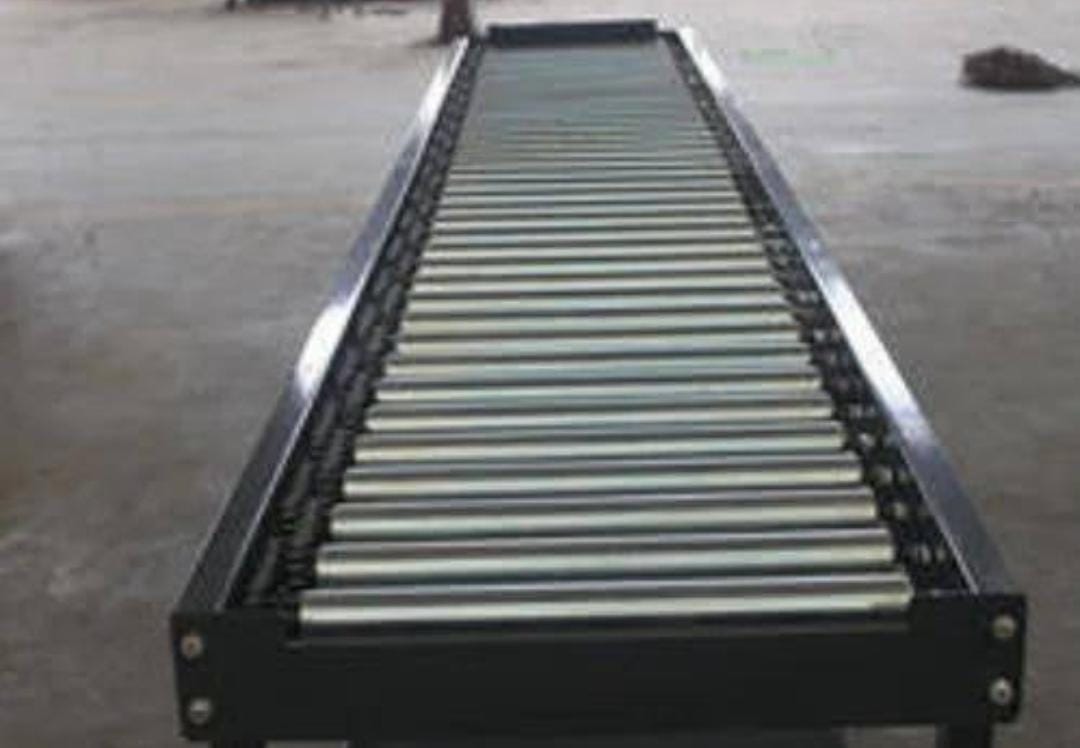
Bamboo Processing Conveyors
Belt conveyors for bamboo chipping feed, dust and powder handling, bamboo stick and sliver lines, and bamboo charcoal and briquette units. Skirtboards specified for splintering.
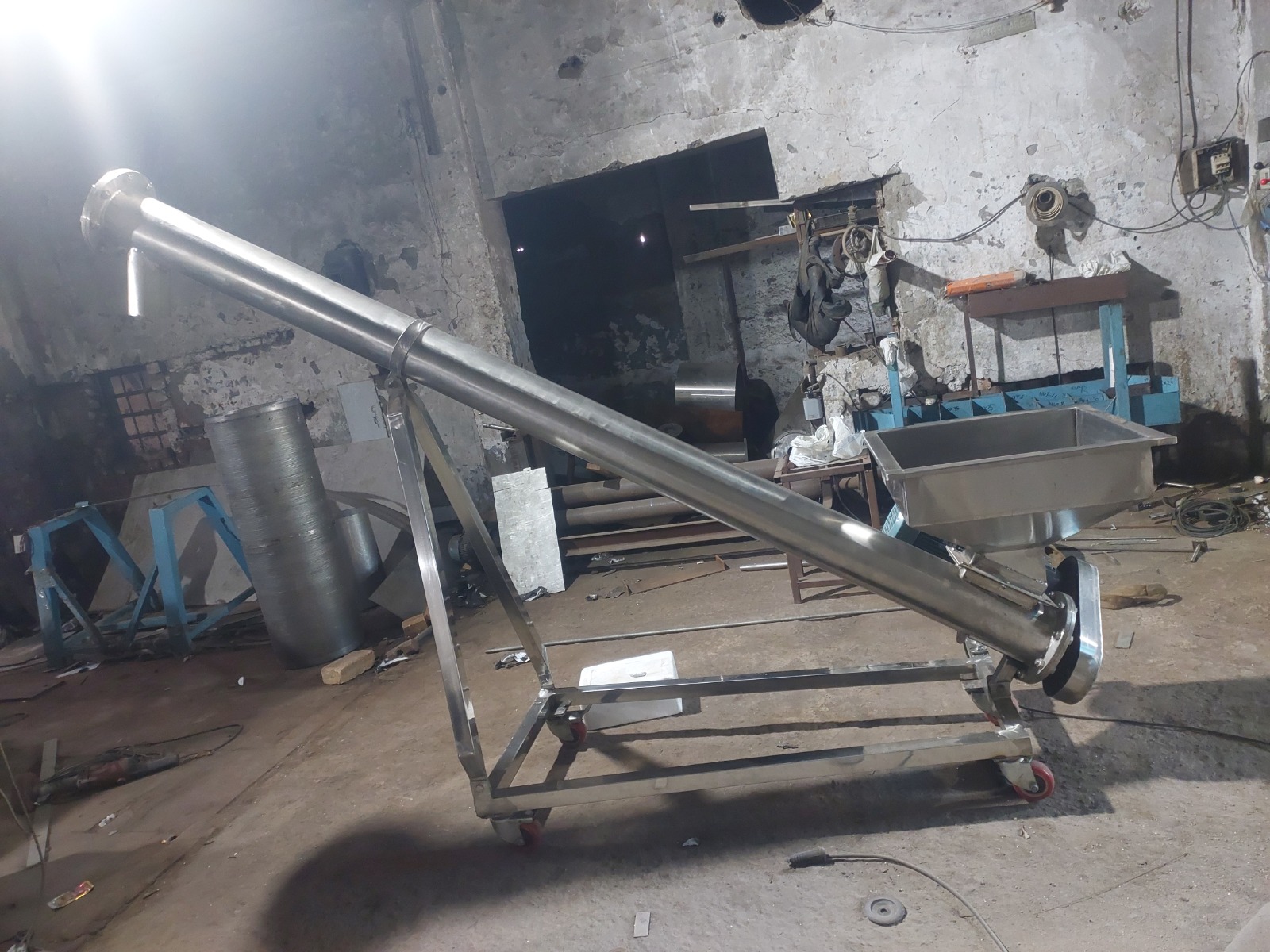
Ginger & Turmeric Conveyors
Wash-down ready food-grade conveyors for ginger washing, slicing and drying feed lines, and for turmeric boiling, drying and grinding feed lines. Stainless frames on request.

Chilli & Fruit Conveyors
Food-grade flat and cleated conveyors for chilli sorting, drying and grinding feed lines, and for pineapple and other fruit processing. Gentle handling, dust-controlled.
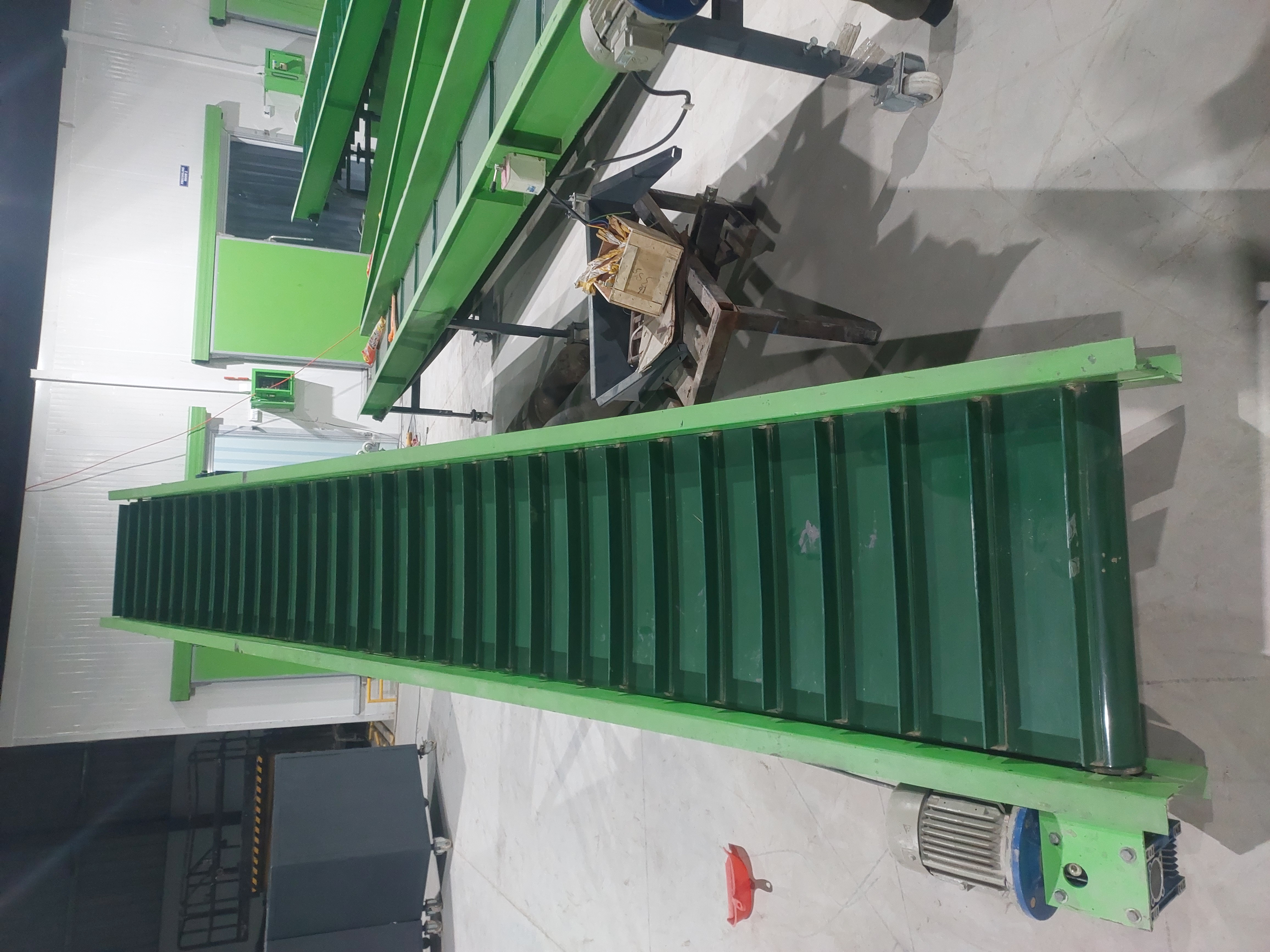
Inclined & Cleated Conveyors
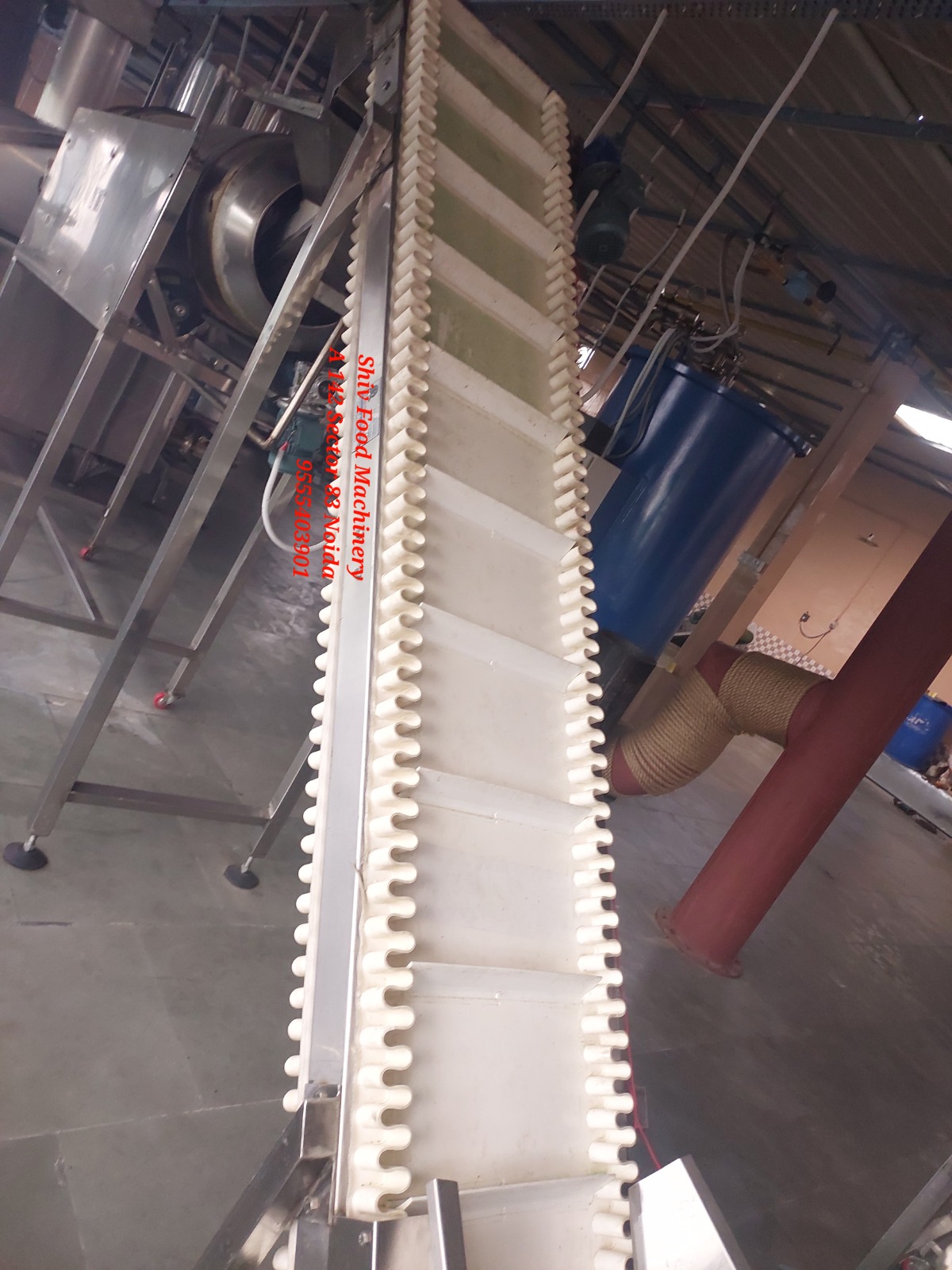
The workhorse for Mizoram sites. Cleated belts for steep inclines, adjustable discharge heights, compact footprint for stepped hillside platforms.
Modular Belt Conveyors
Plastic modular belts for food, packaging and small unit operations where hygiene and cleanability matter. Easy to reconfigure between product lines.

Portable & Skid-Mounted Conveyors
For operators who move between sheds or process different materials seasonally. Skid-mounted or caster-mounted units with quick-setup incline adjustment.
Sectors That Rely on Our Conveyors Across Mizoram
Mizoram’s industry is small in scale but wide in variety. The same conveyor factory supplies bamboo processors, ginger and turmeric dryers, chilli and pineapple lines, rice mills, brick kilns, stone crushers, sawmills and border-trade godowns. Each one needs a different belt, frame and drive specification — and all of them need equipment that survives the terrain and the monsoon.
Bamboo Processing
Bamboo chips, dust, sticks, slivers, charcoal and briquettes. Skirtboard and belt specifications for splintering material.
Ginger & Turmeric
Washing, slicing, drying feed and grinding feed lines. Food-grade belts and stainless frames where wash-down is required.
Chilli & Spices
Sorting, drying and grinding feed. Dust-controlled and covered conveyors to protect operators and product quality.
Rice & Grain
Rice mills, maize drying and small grain storage units. Gentle troughing conveyors with controlled feed rates.
Brick & Stone
Brick kiln clay and fired brick handling, stone crusher feed and discharge lines. Abrasion-resistant belts and impact idlers.
Border Trade & Logistics
Godowns and loading points near Zokhawthar and other border trade corridors. Bag handling and incline loading conveyors.
 Bamboo-Ready · Splinter-Resistant
Bamboo Conveyors for Mizoram’s Bamboo Economy
Mizoram is one of India’s largest bamboo-producing states, and bamboo-based enterprise — from bamboo sticks and slivers to bamboo chips, powder, charcoal and briquettes — is a growing part of the state’s rural and small-industry economy. Bamboo is a deceptive material to convey: it looks like a simple, uniform feed, but it splinters, generates fine dust, and can bridge or jam if the conveyor is not specified around its actual characteristics.
A bamboo conveyor is not a general-purpose conveyor. It needs a belt surface and skirtboard arrangement that tolerates splinters without tearing the belt cover, a transfer design that avoids bridging at the feed point, and dust sealing at the discharge so fine bamboo powder does not escape into the shed. It also needs to survive Mizoram’s monsoon — because bamboo season overlaps with the wet months, and wet bamboo dust is far more aggressive on steel than dry dust.
- Bamboo chips and splinters: Abrasion-resistant belt covers and skirtboards with adequate clearance so splinters do not wedge between belt and skirt rubber and tear the belt edge.
- Bamboo dust and powder: Covered conveyor sections and dust seals at transfer points keep fine bamboo powder contained and prevent it settling on bearings and drives.
- Bamboo stick and sliver lines: Flat and cleated conveyors with controlled feed rates and smooth surfaces so sticks align and do not scatter at transfers.
- Bamboo charcoal and briquettes: Heat-tolerant belts where the material arrives warm, and heavy-duty frames where briquettes are dense and impact the belt at loading.
- Monsoon protection: Drainage paths, sealed box sections, galvanised or epoxy-coated frames and IP65 drives for units that operate through the wet season.
Serviced areas: Aizawl district, Mamit, Kolasib, Serchhip, Lunglei and other bamboo-cluster areas across Mizoram. Bamboo conveyors typically need 3–5 week lead times depending on duty.

Food-Grade Conveyors for Ginger and Turmeric Processing
Mizoram is one of India’s important ginger and turmeric producing states, and processing of both crops — washing, slicing, drying, grinding, packaging — has been growing with state support and cooperative enterprise. The conveyors that connect these processing steps are not heavy-duty industrial machines, but they are food-contact equipment, and they must be clean, gentle on the product and able to survive daily wash-down in a wet, humid environment.
Ginger and turmeric both carry fibres, and turmeric stains aggressively. A conveyor that is not specified around these properties will, within one season, show stained, abraded belts and frames that cannot be cleaned back to food-contact condition. Our ginger and turmeric conveyors are specified around three priorities: food safety, cleanability and belt life.
- Washing and slicing feed: Food-grade PU belts with smooth surfaces, stainless steel contact parts and drainage-aware frames for wet ginger and turmeric feed to slicing machines.
- Drying feed lines: Flat or cleated conveyors that distribute sliced ginger or turmeric evenly across drying trays or tunnels, with adjustable speed to match the drying cycle.
- Grinding feed: Controlled feed-rate conveyors that meter dried ginger or turmeric into grinding mills without surges that overload the mill or generate excess dust.
- Stain resistance: Belt compounds and frame coatings chosen for turmeric stain resistance, so the equipment does not remain yellow after cleaning.
- Wash-down-ready frames: Stainless steel or food-grade painted frames with sealed welds and drainage paths, so wash-down water does not sit on ledges or inside box sections.
Serviced areas: Champhai, Aizawl, Lunglei, Serchhip, Kolasib, Mamit and other ginger and turmeric growing clusters across Mizoram. Food-grade ginger and turmeric conveyors typically need 4–5 week lead times.
Food-Grade Conveyors for Mizoram’s Chilli and Horticulture Lines
Mizoram’s horticulture sector — chilli, pineapple, banana, passion fruit and other fruit — is growing, and so is the processing side: drying, sorting, pulping, packaging and value-added product manufacture. These lines need food-grade, gentle-handling conveyors that can be cleaned between products, and they need to work in a state where monsoon humidity is a permanent design constraint.
Chilli Sorting & Drying Lines
Food-grade flat belt conveyors with controlled speed for sorting, and cleated incline conveyors for feeding drying racks or tunnels. Covered sections available for chilli dust containment.
Pineapple Processing Conveyors
Wash-down ready conveyors with food-grade PU belts for pineapple washing, sorting and pulping feed. Juice-resistant belt compounds and drainage-aware frames.
Fruit Handling Conveyors
Gentle flat and cleated belts for banana and mixed fruit handling. Soft PVC surfaces and adjustable speed for product that bruises easily.
Passion Fruit Pulp Lines
Stainless-framed modular or PU belt conveyors for passion fruit sorting and pulping feed. Crevice-free design for hygienic operation.
Pickle & Preserve Packing Lines
Food-grade flat conveyors for jar handling and packing lines. Non-marking belts and cleanable frames for small pickle and preserve units.
Spice & Powder Conveyors
Enclosed or covered conveyors prevent dust escape and cross-contamination between spice types. Stainless frames and food-grade belts as standard.
Rice Mill and Grain Conveyors for Mizoram’s Valley Farmland
Rice is Mizoram’s staple crop, and rice mills — ranging from small village mills to larger district-level units — rely on conveyors to move paddy, rice and bran between cleaning, husking, milling, polishing and bagging stages. Maize drying and small grain storage add further conveyor-fed operations in the state’s valleys and foothills.
Rice is a surprisingly demanding material to convey well. Paddy cracks if drop heights are too high, rice abrades if belt surfaces are too rough, and bran is a fine dust that escapes readily and settles on bearings. The wrong conveyor either breaks grain, generates excess dust, or wears out its idlers faster than it should. Our rice mill conveyors are specified around these exact issues, and around the fact that most Mizoram mills run seasonal shifts at harvest.
- Paddy intake: Troughing and flat belt conveyors that move paddy from unloading to cleaning and husking without cracking grain.
- Milled rice transfer: Food-grade flat conveyors for milled rice between polishing, grading and bagging, with smooth surfaces that do not abrade the grain.
- Bran handling: Covered conveyors and dust seals for bran, which is fine, light and prone to escaping into the mill shed.
- Bag handling: Incline conveyors with grip-top belts for moving filled rice bags to loading or storage without slip.
- Seasonal duty: Drives and frames sized for intermittent seasonal operation, with a spares kit that keeps a seasonal mill running through harvest without a spares wait.
Serviced areas: Aizawl, Serchhip, Lunglei, Kolasib, Champhai, Mamit and valley rice-mill clusters across Mizoram. Rice mill conveyors typically need 3–4 week lead times.

Heavy-Duty Conveyors for Brick Kilns and Stone Crushers
Brick kilns and stone crushers are among the hardest-wearing applications in Mizoram’s small-industrial landscape. Clay for brick kilns is wet, sticky and abrasive; fired bricks are dense and impact the belt at loading. Stone crusher feed and discharge involves high-impact loading, abrasive stone dust and frequent belt damage if the specification is not heavy-duty from the start.
These are not applications for a light-duty conveyor. Every component — belt grade, idler type, frame section, drive sizing and belt-cleaning arrangement — is selected for the actual duty and the actual site, not for a generic duty table. Mizoram’s terrain adds a further constraint: most kilns and crushers sit on sloping ground, so incline conveyors are the norm rather than the exception.
- Clay and brick feed: Heavy-duty rubber belts with abrasion-resistant covers and appropriate troughing for wet, sticky clay that tends to build up on return idlers.
- Fired brick handling: Impact idlers at transfer points and rubber-covered belts that survive repeated brick-impact loading without cutting or gouging.
- Crusher feed and discharge: Heavy impact idlers and buffer beds, high-abrasion belt covers, and frames built from heavier sections than general-purpose conveyors.
- Stone dust control: Skirtboards, dust seals and belt cleaners to keep abrasive stone dust off the return strand and out of bearings.
- Incline duty on hill sites: Incline angles and cleat profiles chosen to suit the slope of the site, with drive sizing that accounts for the incline load and wet clay or stone weight.
Serviced areas: Mamit, Kolasib, Aizawl district, Saitual and other brick kiln and quarry clusters. Heavy-duty brick and stone conveyors typically need 5–6 week lead times.
Bag-Handling and Loading Conveyors for Border Trade and Godowns
Mizoram shares borders with Myanmar and Bangladesh, and trade corridors — most notably around Zokhawthar — carry a wide range of goods in bags, sacks and cartons. Godowns and loading points along these corridors need conveyors that can handle mixed cargo, load and unload trucks efficiently, and do so with minimal labour and minimal breakage of goods.
In a border trade godown, the conveyor is usually a simple bag-handling incline — but “simple” is deceptive. The belt must grip bags on a steep incline without slipping, the discharge height must be adjustable to suit different truck sizes, the frame must survive monsoon rain and rough handling, and the whole unit must be movable if the godown layout changes. We build this class of conveyor to exactly those requirements.
- Bag-handling incline conveyors: Grip-top belt surfaces and cleated options for loading sacks onto trucks or stacking bags in godowns without slip and with minimal manual lifting.
- Adjustable discharge height: Manual or motorised adjustment so a single conveyor can load different truck sizes and stack to different godown heights.
- Portable and skid-mounted units: For godowns and loading points where the layout changes with trade cycles, the conveyor can be moved to where it is needed.
- Weather protection: IP65 or IP66 drives, drainage-aware frames and galvanised or epoxy-coated steel for godowns exposed to monsoon rain.
- Carton and parcel lines: Modular and flat belt conveyors for the increasing volume of parcel and carton cargo moving through border trade corridors.
Serviced areas: Zokhawthar, Champhai, Aizawl and other border trade corridors and godown clusters. Bag-handling conveyors typically need 3–5 week lead times.
Which Belt Conveyor Type Is Right for Your Mizoram Application?
Choosing the right type is the single most important decision in conveyor selection — and on a steep Mizoram site, it is also a question of fit. A conveyor that is wrong for the material damages the product; a conveyor that is wrong for the terrain will not fit the shed. Use the comparison below as a starting point.
| Conveyor Type | Best For | Typical Industries in Mizoram | Belt Material | Incline Limit |
|---|---|---|---|---|
| Flat Belt Conveyor | Sorting, inspection, horizontal transfer | Ginger, turmeric, chilli, rice, packaging | PU, PVC | 0° |
| Inclined Belt Conveyor | Elevating between process stages, hill sites | Bamboo, brick, stone, rice, border trade | Rubber, PU, PVC | Up to 30° |
| Cleated Belt Conveyor | Steep inclines, fragile or scattered material | Ginger, turmeric, fruit, brick, stone | PVC or PU with cleats | Up to 45° |
| Troughing Belt Conveyor | Bulk material in moderate volumes | Rice, grain, clay, stone | Heavy-duty rubber | Up to 20° |
| Modular Belt Conveyor | Hygienic, flexible, wet environments | Food processing, packaging, pharma-style lines | Plastic modular | Up to 25° |
| Portable / Skid-Mounted | Changing sites, seasonal processing | Bamboo, border trade, multi-shed units | Rubber, PU | Up to 30° |
Not sure which type fits? Send us your material, throughput and a site photograph and we will recommend the right configuration — including whether the site needs a fixed or portable unit.
Belt Selection: Food-Grade PU, Heavy-Duty Rubber, Grip-Top and Modular
The belt is the most application-sensitive component of any conveyor. We match belt material to the material being conveyed and to the environment, because the wrong belt either wears out too fast, damages the product, or fails a food-safety requirement. In Mizoram’s wet climate, belt material choice also has to account for moisture absorption and fungal growth on non-food-grade compounds.
- Food-grade PU — ginger, turmeric, chilli, fruit, rice and packaging; smooth surfaces, easy to clean, stain-resistant and auditable.
- Heavy-duty rubber (abrasion-resistant) — brick clay, fired brick, stone crusher feed and discharge, with heavy impact resistance at transfer points.
- Grip-top rubber — bag handling in border trade godowns, rice bag loading and any incline where bags must not slip.
- Cleated PU or PVC — steep inclines in ginger, turmeric, fruit and small-unit brick or stone lines where material would roll back on a smooth belt.
- Modular plastic — food processing, packaging and small-unit operations where cleanability and easy reconfiguration matter more than raw throughput.
- Anti-fungal / moisture-resistant compounds — for conveyors that operate through the monsoon and cannot be fully dried between shifts.
Belt thickness, ply, cover grade and cleat profile are specified against the duty, not chosen from a generic stock list. A ginger shed and a brick kiln may both need a 500 mm wide belt, but the belt itself will be fundamentally different.
Designing Conveyors for Mizoram’s Slopes, Steps and Small Sheds
Mizoram’s terrain is the first thing a conveyor must be designed around. Most industrial and processing sites are on slopes, often on stepped or terraced platforms, with limited flat ground and small sheds. A conveyor designed for a flat inland factory floor will either not fit, or will be so oversized that the operator has to rebuild the shed to accommodate it. Our designs start with the site, not the catalogue.
Shorter Spans, Steeper Inclines
We build conveyors with shorter frame spans and steeper, well-supported incline sections so a compact footprint can achieve the same lift as a long horizontal-plus-incline arrangement. Cleated belts are used where incline angles exceed what a smooth belt can hold.
Adjustable Support & Anchoring
For sites with stepped platforms, we specify adjustable support legs and anchoring arrangements that can accommodate small level differences between the load point and the discharge point without fabricating custom shims on site.
Skid-Mounted and Caster-Mounted
Where the processing shed is small or the operation moves between sites seasonally, we build skid-mounted or caster-mounted conveyors that can be repositioned without dismantling the frame. Braked casters and levelling feet are standard on caster-mounted units.
Foundation & Drainage Detail
On sloped ground, foundation plinths are designed to sit clear of slope runoff, and drainage is routed so that water from uphill does not flow onto the conveyor foundation. Anchors and fasteners are sized for the incline load, not just for gravity load.
Service Space in Tight Sites
In small sheds, maintenance space is limited. We lay out the conveyor so that the drive, take-up and cleaner components that need regular access are reachable without dismantling adjacent equipment or moving stored material.
Sectional Frames for Hill Roads
Hill roads and narrow accesses constrain what can be delivered to site. Frames are built in transportable sections that can be carried and assembled on site, rather than as single welded units that cannot navigate the access road.
Built for One of India’s Heaviest Monsoon Regimes
Mizoram receives among the highest rainfall in India, concentrated between May and September, and often arriving in intense bursts that overwhelm drainage and expose outdoor equipment to sustained wetting. A conveyor specified for a dry or mild-monsoon region will fail here — through water ingress into bearings and drives, through frame corrosion, through belt moisture absorption, or through foundation undermining by runoff. We design each of these failure modes out at the drawing stage.
Sealed Frames & IP Drives
Sealed box sections prevent water from entering the frame and corroding from inside out. Drive motors and gearboxes are IP65 or IP66 rated, with cable entries sealed and gland plates treated to prevent water tracking into the enclosure.
Runoff-Aware Design
Frames are designed with drainage paths so water does not pool on ledges. Foundation plinths are raised against surface water and located to avoid concentrating runoff onto the foundation. Where the site slopes steeply, drainage channels route water around the conveyor foundation.
Coating and Fastener Selection
Hot-dip galvanising or epoxy coating on outdoor frames; stainless or hot-dip galvanised fasteners; and galvanic isolation between dissimilar metals where required. Stainless is specified where food contact or continuous wash-down makes it the correct choice.
Moisture-Resistant Belt Compounds
Belts are specified for low moisture absorption and resistance to fungal growth, so that a conveyor that operates through the monsoon does not develop belt-surface degradation or belt-length changes from absorbed water.
Stability in Steep Terrain
In steep terrain, monsoon slope movement is a genuine risk. Foundations and anchor designs are specified for the site’s slope stability, and where necessary we recommend site drainage and retaining measures before the conveyor is installed.
Food-Grade Wash-Down Ready
For ginger, turmeric, chilli and fruit lines, conveyors are designed to be washed down daily. That means drainage-aware frames, sealed bearings, wash-down-compatible belts and no crevices where process residue can collect.
From Cutting to Trial Assembly — How We Build Every Conveyor
Every conveyor is built to order in our fabrication facility. The process follows a disciplined sequence so that the finished unit is test-run before dispatch — not assembled for the first time in your shed in Aizawl or Champhai. For Mizoram deliveries, we add a specific transport and monsoon-protection packing step before dispatch.
Design & Drawing Approval
Layout, structural calculations, incline angle, belt specification and coating system signed off before cutting. Site photographs and walkthroughs are used where a physical survey is not practical before order.
Frame Fabrication
Cutting, drilling, welding and surface treatment — painting, galvanising, epoxy coating or stainless passivation. Frames are built in transportable sections where site access requires it.
Component Assembly
Idlers, pulleys, drive unit, take-up system and belt installation. Belt tracking is set up during assembly, not on site. Cleat layout is verified against the incline angle.
Electrical Integration
Motor, starter or VFD, sensors and safety devices wired and tested. Insulation resistance, earth continuity and IP enclosure integrity checked, with specific attention to sealing for monsoon exposure.
Trial Assembly & Run-In
Empty and loaded run to check tracking, tension, alignment, noise and drive temperature before dispatch. Incline load testing is performed for incline conveyors. Photographs and inspection reports shared with the buyer.
Transport Packing
Frames packed with edge protection and wrapped against road dust and monsoon rain during transit. Belts rolled, wrapped and sealed. Small components boxed, labelled and supplied with a first-year spares kit sized to reduce remote-district spares wait.
Quality Checks That Matter for Mizoram Conditions
Quality control is not a final inspection — it is a series of checks at each stage. A conveyor that fails in a remote Mizoram district is far more expensive to fix than one that fails in an industrial corridor with a service engineer nearby. So we add remote-site reliability checks on top of the standard inspection sequence.
Material Traceability
Belt, frame and drive components tracked to batch or supplier. Material certificates provided on request, including belt grade data sheets for food-grade and heavy-duty specifications.
Weld & Structural Inspection
Especially for incline and heavy-duty brick or stone conveyors. Weld quality checked before surface treatment, and structural members verified against design loads and incline angles.
Coating Thickness Audit
Paint DFT or galvanising thickness checked on frames, especially for outdoor conveyors. Coating systems verified against the specification for monsoon and humidity exposure.
Belt Tracking & Incline Load Test
Tracking verified during trial run under load — not just empty. Incline conveyors are additionally tested under simulated load at the specified incline angle.
IP Enclosure & Drive Temperature
IP65 or IP66 enclosure integrity verified for monsoon-exposed applications. Drive running temperature checked during the trial run to confirm thermal margin for the ambient conditions.
Photo Documentation & Spares Kit Check
Photographs shared at fabrication, coating, assembly and trial-run stages. The first-year spares kit is checked off against the commissioning list before the conveyor leaves the facility.
Installation and Commissioning Across Mizoram
A conveyor that is not aligned and tensioned correctly will fail early, regardless of build quality. We provide installation supervision and commissioning support across Aizawl, Lunglei, Champhai, Serchhip, Kolasib, Saiha, Lawngtlai, Mamit and other industrial locations in Mizoram. On steep sites, installation quality matters even more than on flat sites — a small alignment error translates into a large tracking issue at the incline.
Our engineers handle foundation checks, frame levelling on stepped platforms, belt alignment, drive alignment, tension setting and no-load/load trials. For incline conveyors, we test load retention at the specified incline angle and adjust the cleat arrangement or belt tension if the material does not hold as expected. Operators are trained on start-up, shutdown, emergency stops, incline load handling and basic tracking adjustments. The commissioning report becomes the baseline for future maintenance.
- Foundation & levelling: Frame levelled and anchored on stepped or sloped platforms, with plinths set clear of slope runoff.
- Belt alignment: Belt centred and tracking under load, pulley alignment verified, with specific attention to incline sections.
- Tension setting: Take-up system set for correct belt tension at operating temperature and incline load.
- Incline load testing: Material tested at the specified incline angle to confirm cleat and belt performance.
- Trial runs: No-load then load trial runs to verify performance against specification.
- Operator training: Start-up, shutdown, emergency stops, incline loading practice and basic maintenance tasks.
Maintenance Planning for Mizoram’s Rain and Terrain
Monsoon, humidity and continuous operation make maintenance unavoidable. A planned schedule extends belt life and prevents unplanned stoppages. In Mizoram, where a spares shipment can take a week or more, planned maintenance is also a form of spares risk management. We help buyers set up a simple maintenance schedule at commissioning and size the first-year spares kit around the site’s duty.
- Daily: Visual check for belt tracking, spillage, unusual noise and belt surface damage. On incline conveyors, confirm material is not slipping back at the loading point.
- Weekly: Belt tension, cleaner blades, pulley lagging and fastener condition. Visual check for water pooling on frames or near the drive.
- Monthly: Idler rotation, bearing temperature, gearbox oil level, frame corrosion, dust seal condition. Clean out drainage paths before and during monsoon.
- Quarterly: Belt thickness measurement, structural bolt torque, electrical insulation test, and coating touch-up on any scratched or chipped areas.
- Pre-monsoon: Drainage paths cleared, coating checked, seals inspected, motor enclosure integrity verified, foundation plinth height checked against expected runoff levels, and slope drainage verified.
Safety Features Designed Into Every Conveyor
Belt conveyors have nip points, rotating pulleys and exposed drive components. On incline conveyors, there is also the risk of material rolling back at the loading point. Safety is designed in, not added later. Our standard safety package covers operator protection across bamboo, ginger, turmeric, chilli, rice, brick, stone and border trade applications in Mizoram.
- Belt guards and nip guards at all pulley points.
- Emergency pull-cords along the full conveyor length.
- Motor isolators and lock-out points for maintenance.
- Belt-sway switches on outdoor incline and heavy-duty conveyors.
- Backstop or hold-back arrangements on steep incline conveyors to prevent belt roll-back when the drive stops under load.
- Clear warning labels and operator training at commissioning, with specific training on incline loading practice.
Spare Parts Availability for Mizoram Customers
In a remote state with hill-road access and a five-month monsoon, a spare-parts wait is not an inconvenience — it can mean a whole season lost. We maintain stock of common belt widths, idler diameters, pulleys and drive components, and we ship a first-year spares kit with every conveyor so that routine replacements do not require a multi-week wait.
Belts
Food-grade PU, heavy-duty rubber, grip-top and modular belts in common widths. Cut to length in our facility for fast dispatch.
Idlers & Pulleys
Carrying idlers, return idlers, impact idlers and pulleys in standard diameters. Galvanised or stainless on request.
Fasteners & Cleaners
Belt fasteners, cleaner blades, skirt rubber and pulley lagging. Consumables available in small quantities for fast repair.
Coating Touch-Up
Epoxy and industrial coating touch-up kits, galvanising repair compounds and replacement stainless fasteners for monsoon-exposed conveyors.
Drive Components
Motors, gearboxes, couplings and VFDs in common ratings, with IP65 or IP66 options for outdoor and monsoon-exposed installations.
First-Year Spares Kit
Every Mizoram delivery includes a recommended spares kit with part numbers and quantities, sized to the conveyor duty and the district’s access constraints.
Customisation: Widths, Lengths, Angles and Interfaces
No two Mizoram sites are identical — and no two sheds, slopes or access roads are identical either. A conveyor that is bought off a catalogue rarely fits an existing shed or a stepped hillside platform without compromise. We customise every conveyor to the actual layout, material, throughput and access constraints of the site it is going into.
- Belt width: 300 mm to 1,200 mm, matched to throughput and material size, with compact options for small sheds.
- Length and incline: Custom lengths and incline angles up to the material’s repose limit, with cleated options for steep hill sites.
- Frame material: Painted mild steel, hot-dip galvanised, SS 304 or SS 316 depending on environment and hygiene requirement.
- Drive position: Head-end, tail-end or centre drive depending on layout, access and incline.
- Discharge height: Fixed or adjustable, with manual or motorised adjustment for flexible godown or truck loading.
- Mobility: Fixed, skid-mounted or caster-mounted for operations that move between sheds or seasonal sites.
- Sectional frames: Frames supplied in transportable sections where hill-road access to the site is constrained.
- Controls: Local starters, VFDs, PLC-integrated systems with interlocks and remote monitoring where needed.
Conveyors can be supplied as standalone units or integrated with existing machinery, hoppers, dryers, slicers, grinders, cleaners, packers and bagging stations.
What Determines the Price of a Belt Conveyor in Mizoram
Price is driven by duty, incline and environment — not by length alone. A 6-metre ginger shed conveyor and a 6-metre stone crusher conveyor are different machines with different price points, and a hill-site incline conveyor costs more than a flat conveyor of the same length. Use the indicative ranges below as a starting point, then send us your specification for an itemised quotation.
| Conveyor Type | Typical Application in Mizoram | Indicative Price Range (Per Metre) |
|---|---|---|
| Compact Standard Flat Belt Conveyor | Sorting, packaging, light handling | ₹32,000 – ₹52,000 |
| Food-Grade Ginger / Turmeric / Chilli Conveyor | Washing, slicing, drying and grinding feed | ₹50,000 – ₹90,000 |
| Incline / Cleated Conveyor | Elevation on hill sites, drying feed | ₹45,000 – ₹85,000 |
| Rice / Grain Troughing Conveyor | Paddy, rice, bran, maize | ₹45,000 – ₹80,000 |
| Brick Kiln Conveyor | Clay feed, fired brick handling | ₹55,000 – ₹95,000 |
| Stone Crusher Conveyor | Crusher feed and discharge | ₹75,000 – ₹1,40,000 |
| Modular Belt Conveyor | Food, packaging, small-unit lines | ₹55,000 – ₹1,10,000 |
| Portable / Skid-Mounted Unit | Seasonal or multi-site operations | ₹60,000 – ₹1,20,000 |
Prices are indicative and vary with frame material, belt specification, incline angle, drive type, controls, mobility and transport to district. Request an itemised quotation.
Frame Material & Coating
Stainless steel costs more than painted mild steel but is often necessary for food wash-down. Galvanising or epoxy coating adds cost but substantially extends outdoor monsoon life.
Belt & Incline
Food-grade PU and heavy-duty abrasion-resistant rubber cost more than standard belts. Cleated belts and steeper incline angles add to the belt, frame and drive cost.
Logistics & Mobility
Transport to a remote district and the option for skid-mounted or caster-mounted units add cost, but can reduce installation time and labour significantly on a hill site.
Lead Times, Packing and Transport to Mizoram Districts
Compact standard conveyors take 3–4 weeks. Food-grade ginger, turmeric and chilli conveyors take 4–5 weeks. Incline and heavy-duty stone or brick conveyors take 5–6 weeks. Lead times start from drawing approval and advance payment, not from enquiry.
Add 4–7 days for road transport to Aizawl and other districts, depending on the season and road conditions. We plan dispatch so that monsoon-driven road delays do not disrupt installation schedules where possible. Conveyors are dispatched in transportable sections with frames packed against road dust and rain, belts rolled and wrapped, and small components boxed and labelled. We provide packing lists and lifting instructions for site handling, and coordinate transport to Aizawl, Lunglei, Champhai, Serchhip, Kolasib, Saiha, Lawngtlai, Mamit and other destinations.
Monsoon note: Dispatch during the peak monsoon (June–August) may add transit time on hill roads. Where a project is time-critical, we recommend scheduling dispatch and installation outside the peak monsoon window, or planning for additional transit buffer.
| Conveyor Type | Manufacturing Lead Time |
|---|---|
| Compact Standard Flat / Incline | 3–4 weeks |
| Food-Grade Ginger / Turmeric / Chilli | 4–5 weeks |
| Rice / Grain Conveyor | 3–4 weeks |
| Modular Belt Conveyor | 3–4 weeks |
| Brick Kiln Conveyor | 4–6 weeks |
| Stone Crusher Conveyor | 5–6 weeks |
| Portable / Skid-Mounted Unit | 4–5 weeks |
| Transit to District (Aizawl, etc.) | +4–7 days |
Belt Conveyor Supply & Installation Across Mizoram
We supply, deliver and support belt conveyor systems across Mizoram’s districts and towns. Below is our service coverage by district, the belt conveyor manufacturer service we provide, the industries we serve, the conveyor types we typically install, and the expected lead time.
| City / District — Belt Conveyor Manufacturer Service | Primary Industries Served | Typical Conveyor Types | Lead Time |
|---|---|---|---|
| Aizawl — Belt conveyor manufacturer in Aizawl | BambooRice MillsWarehousingFood Processing | Compact incline belt conveyor, food-grade PU conveyor, modular belt conveyor | 3–5 weeks + transit |
| Lunglei — Food-grade conveyor supplier in Lunglei | GingerTurmericRice Mills | Food-grade flat belt conveyor, incline cleated conveyor, troughing conveyor | 4–5 weeks + transit |
| Champhai — Ginger and border trade conveyor manufacturer in Champhai | GingerBorder TradeAgri | Food-grade incline conveyor, bag-handling incline conveyor, flat belt conveyor | 4–6 weeks + transit |
| Serchhip — Rice mill and agri conveyor supplier in Serchhip | Rice MillsAgri | Troughing belt conveyor, flat belt conveyor, bag-handling conveyor | 3–4 weeks + transit |
| Kolasib — Chilli and food conveyor manufacturer in Kolasib | ChilliFood ProcessingAgri | Food-grade flat belt conveyor, incline cleated conveyor, covered conveyor | 4–5 weeks + transit |
| Saiha — Belt conveyor supplier in Saiha | AgriBambooFood Processing | Compact incline conveyor, food-grade conveyor, portable conveyor | 4–6 weeks + transit |
| Lawngtlai — Belt conveyor supplier in Lawngtlai | BambooAgriBorder Trade | Incline cleated conveyor, bag-handling conveyor, portable conveyor | 4–6 weeks + transit |
| Mamit — Brick kiln and bamboo conveyor manufacturer in Mamit | Brick KilnsBambooAgri | Heavy-duty incline conveyor, troughing belt conveyor, bamboo handling conveyor | 4–6 weeks + transit |
| Khawzawl — Agri and food conveyor supplier in Khawzawl | GingerAgriFood Processing | Food-grade flat belt conveyor, incline cleated conveyor | 4–5 weeks + transit |
| Hnahthial — Belt conveyor supplier in Hnahthial | BambooRice MillsAgri | Troughing belt conveyor, incline conveyor, portable conveyor | 4–6 weeks + transit |
| Saitual — Stone crusher and agri conveyor manufacturer in Saitual | Stone CrushersAgri | Heavy-duty crusher conveyor, incline conveyor, troughing belt conveyor | 5–6 weeks + transit |
| Zokhawthar (Champhai district) — Border trade conveyor supplier in Zokhawthar | Border TradeLogistics | Bag-handling incline conveyor, portable conveyor, modular belt conveyor | 4–6 weeks + transit |
Don’t see your town? We ship anywhere in Mizoram with road access. Contact us for an out-of-district belt conveyor quote.
Why Local Knowledge Matters for Conveyor Selection in Mizoram
A supplier who understands Mizoram knows that bamboo splinters and dust will destroy a general-purpose belt; that ginger and turmeric require wash-down-ready food-grade equipment, not a mining conveyor; that brick kilns and stone crushers need heavy-duty incline conveyors sized for wet clay and stone impact; that border trade godowns need grip-top bag-handling conveyors; and that the monsoon will find every weak point in sealing, coating and drainage. This knowledge shapes the specification before a single drawing is made.
Understanding Material Characteristics
Bamboo splinters, ginger fibres, turmeric stains, chilli dust and rice bran all behave differently on a belt. We specify skirtboard clearance, belt compound, transfer height and belt cleaner type around the material, not around a generic duty table.
Understanding Failure Modes
We know which components fail first in Mizoram — water-logged bearings, corroded fasteners, undermined foundations, UV-cracked belts — and we design those weaknesses out at the drawing stage instead of fixing them in the field.
Understanding Spares Logistics
A spares wait in Aizawl is not the same as a spares wait in Pune. We size first-year spares kits and recommend critical spare quantities based on district access, so a minor failure does not become a season lost.
Our engineering team works with Mizoram buyers to translate site conditions, material characteristics and access constraints into conveyor specifications, rather than offering a catalogue product and hoping it fits.
Case Configurations We Build for Mizoram Buyers
The configurations below are representative of real conveyor specifications we build for Mizoram buyers. Every project is customised, but these examples give a sense of the typical belt conveyor manufacturer deliverable across the state’s major industries.
Bamboo Chips Conveyor, 8 m
Specification: 500 mm wide incline belt conveyor, abrasion-resistant rubber belt, 8 m long, 25° incline, splinter-clearance skirtboards, covered section for dust control, galvanised frame. Delivered in 4 weeks and commissioned at the unit.
Food-Grade Ginger Conveyor, 6 m
Specification: 400 mm wide food-grade PU cleated belt conveyor, 6 m long, 20° incline, stainless steel frame, wash-down ready, VFD-controlled for drying feed. Delivered in 4 weeks.
Turmeric Grinding Feed Conveyor, 7 m
Specification: 450 mm wide food-grade PU flat belt conveyor, 7 m long, stainless steel frame, covered for dust control, stain-resistant belt compound, controlled feed rate to grinding mill. Delivered in 5 weeks.
Chilli Sorting Conveyor, 6 m
Specification: 500 mm wide food-grade flat belt conveyor, 6 m long, stainless steel frame, adjustable speed for sorting team pace, with a short inclined discharge section. Delivered in 4 weeks.
Paddy and Rice Conveyor, 10 m
Specification: 600 mm wide troughing belt conveyor, 10 m long, 12° incline, food-grade belt for milled rice, covered return strand for bran dust control, MS frame with epoxy coating. Delivered in 3 weeks.
Brick Handling Incline Conveyor, 9 m
Specification: 600 mm wide heavy-duty incline belt conveyor, abrasion-resistant rubber belt, 9 m long, 22° incline, impact idlers at feed point, hot-dip galvanised frame. Delivered in 5 weeks.
A Practical Buying Guide for First-Time Conveyor Buyers in Mizoram
Start with the material: its bulk density, particle size, moisture content, temperature and abrasiveness. Then define the duty: tonnes per hour, hours per day, incline angle, and discharge height. Then define the site: slope, platform size, shed dimensions, access road and monsoon exposure. Then choose the belt and frame material based on the environment (indoor/outdoor, wash-down, humidity). Finally, decide on controls, mobility and safety features.
Buyers who define these inputs before requesting quotes get accurate prices and conveyors that work first time. Buyers who request quotes without these inputs either overpay, receive conveyors that need redesign on site, or discover — too late — that the unit does not fit the shed or the access road.
- Material: What is being conveyed — bamboo chips, ginger, turmeric, chilli, rice, brick, stone, bagged goods?
- Throughput: Tonnes per hour, or bags per hour for godown and border-trade operations.
- Duty cycle: Hours per day, days per week, seasonal or year-round.
- Site: Slope, platform size, shed height, access road width, monsoon exposure.
- Layout: Length, incline angle, discharge height, available space.
- Environment: Indoor, outdoor, wash-down, dust, humidity.
- Mobility: Fixed, skid-mounted or caster-mounted.
- Controls & safety: Local, VFD, interlocks, emergency stops, backstop for incline.
Frequently Asked Questions About Belt Conveyor Manufacturers in Mizoram
Quick answers to the questions Mizoram buyers ask us most often about belt conveyors, manufacturer selection, specifications, lead times, transport and installation. Ask your own question →
Get a Belt Conveyor Specification Built for Your Mizoram Site
Send us your material, throughput, site slope, shed dimensions, access constraints and monsoon exposure. We will respond with a recommended conveyor type, belt specification, incline arrangement, preliminary drawing and itemised quotation — built for Mizoram’s terrain and climate, and for your industry.
Request a Belt Conveyor Quote Call +91 95554 03901